

Real Estate Photography for Multi-Family and Investment Properties in Edmonton, Alberta
An Edmonton investment property is not sold to a buyer. It is sold to a spreadsheet — and the photos are what convince someone to open it. With Greater Edmonton listings averaging 39 days on market in July 2026 and rental vacancy sitting near 5.8%, investors have more choice than they have had in years. Your listing has to earn its way onto the shortlist before the numbers ever get a look.
Here is the pattern every Edmonton agent who has listed a fourplex knows well. A solid 1970s walk-up in Queen Mary Park comes to market with strong rent rolls, low deferred maintenance and a fair cap rate. The listing carries six photos: one crooked exterior shot from across the street, a hallway, and four bedrooms belonging to whichever tenants happened to answer the door. It sits. Two blocks away, a comparable building with a complete media package — every unit type, common areas, mechanical room, aerial context and a floor plan set — goes conditional in eleven days.
The difference is not the asset. It is that one listing let an investor underwrite the building from their phone in Calgary or Vancouver, and the other made them guess. This guide covers exactly what a multi-family and investment property media package should include in Edmonton, how to shoot occupied buildings without breaking Alberta's tenancy rules, what it costs, and how to brief a photographer so the results actually support your pro forma.
What You'll Learn in This Guide
Why investment property marketing is a different job than residential listing photography
What Edmonton's 2026 market data means for how you present an income property
The complete shot list for a multi-family building — exterior, unit types, common areas, mechanical
How floor plans and 3D tours change an out-of-province investor's read on a building
When aerial imagery earns its cost on an Edmonton income property
How to photograph occupied suites under Alberta's Residential Tenancies Act
What professional investment property media costs in Edmonton, and how the ROI works
Why Is Marketing an Investment Property Different From Marketing a Home?
Because the buyer is not imagining a life there — they are modelling a return. Residential photography sells feeling; investment photography sells evidence. Both need to be excellent, but they answer different questions.
A family buying a bungalow in Ritchie wants to know whether the kitchen feels bright and whether the backyard is big enough. An investor buying a 12-suite building off 118 Avenue wants to know what condition the roof and windows are in, whether the suites are actually the size the listing claims, what the parking situation looks like, whether the mechanical room has been maintained, and how far it is to the LRT. Every one of those is a photographic question, and most Edmonton investment listings answer none of them.
This matters more in 2026 than it did three years ago. A meaningful share of Alberta multi-family capital comes from outside the province — Ontario and BC buyers chasing Edmonton's yield advantage. Those buyers shortlist remotely and only fly in for the two or three properties that survive the screen. If your listing does not survive the screen, the quality of the asset is irrelevant.
There is also a credibility signal at work. A building presented with clean, complete, well-lit professional photography reads as a well-run building. Six dark phone snaps read as a seller with something to hide, and experienced investors will price that suspicion into their offer.
What Is the Edmonton Investment Market Actually Doing in 2026?
It is a market where supply has caught up with demand, which means presentation has stopped being optional. Buyers with choice get selective quickly.
The REALTORS® Association of Edmonton reported 2,535 residential sales in July 2026 — down 11% year over year — with an average price of $475,079 and an average of 39 days on market, six days longer than the same month in 2025. Condominium apartments averaged $214,521. Inventory is ample and the pace has cooled. That is the backdrop against which every income property in the city is being marketed right now.
On the rental side, Edmonton's vacancy rate sat around 5.8% in the second quarter of 2026, easing slightly from the prior quarter, while CMHC forecasts an average two-bedroom rent of roughly $1,624 for the year. Rents are still growing, but tenants have options — which means an investor is buying not just a rent roll but the building's ability to keep competing for tenants. Photos that show suite condition honestly help a buyer judge exactly that.
Greater Edmonton averaged 39 days on market in July 2026, six days longer than a year earlier, with an average residential price of $475,079. — REALTORS® Association of Edmonton
Edmonton still holds the yield advantage that draws investors west from Toronto and east from Vancouver. Purchase prices remain the lowest of any major Canadian city, and the older walk-up stock in Wîhkwêntôwin, Central McDougall, Alberta Avenue and Norwood continues to trade on cash flow rather than appreciation. The opportunity is real. The competition for a buyer's attention is what has changed.

What Should a Complete Multi-Family Photo Package Include?
At minimum: the full building envelope, one complete set per unit type, every common and mechanical area, and neighbourhood context. For a typical Edmonton walk-up that lands between 30 and 45 images — roughly triple a single-family listing.
The Building Envelope
Shoot all four elevations, not just the pretty one. Investors are reading roofline, soffit and fascia condition, window vintage, brick or stucco integrity, foundation grade, and how water leaves the property. Include the parking area, garbage and recycling enclosure, any block heater plug-ins — a genuine Edmonton underwriting item — and the walkways as they actually are. Hiding a tired north elevation only guarantees a re-trade after the inspection.
One Full Set Per Unit Type, Not Per Unit
You do not need to photograph all twelve suites. You need one complete, well-lit set for each distinct floor plan: bachelor, one-bedroom, two-bedroom. Each set should cover the living area, kitchen, every bedroom, the bathroom, and in-suite storage or laundry. Choose the unit in the best condition for each type and say so plainly in the listing — investors respect a representative sample and distrust a curated one.
Common Areas and Mechanical
This is the section almost every listing skips and every serious buyer wants. Photograph the lobby and entry, stairwells, corridors, shared laundry, storage lockers, and the mechanical room: boiler or furnaces, hot water tanks, and the electrical panel with visible amperage. A clean, dated boiler photo does more to build confidence than any amount of adjective in the remarks.
Neighbourhood and Access Context
An out-of-province buyer does not know that a building near Whyte Avenue rents to University of Alberta students, or that a Mill Woods property sits minutes from the Valley Line Southeast LRT. Context images — the street, nearby transit stops, the commercial strip, the school or campus down the road — turn an address into an actual rental thesis.

How Much Do Floor Plans Change an Investor's Read on a Building?
Substantially — because square footage claims in multi-family listings are notoriously unreliable, and a measured floor plan removes the doubt. For income properties, floor plans are arguably more valuable than they are for houses.
An investor evaluating a Bonnie Doon fourplex is trying to answer three questions at once: is the suite mix what the listing says it is, are the suites competitive for their rent band, and is there any unrealized potential — a basement suite that could be legalized, a den that could be a second bedroom, an oversized one-bedroom that supports a rent bump on turnover. A set of accurate floor plans answers all three in seconds.
Order one plan per unit type plus a building-level plan showing how the suites stack. Include room dimensions and total area per suite. If a suite is non-conforming or below Edmonton's legal-suite standards, that will show up on a plan — which is uncomfortable in the short term and much better than discovering it during due diligence.
When Is Drone Photography Worth It for an Edmonton Investment Property?
Whenever the site itself, the roof, or the location is part of the value — which covers most income properties above a duplex. Aerial imagery is the only practical way to show a buyer the whole asset at once.
From 40 metres up, a single frame shows the full roof surface and its apparent age, the parking count and layout, the lot boundaries, the condition of neighbouring properties, and the building's position relative to major routes like Whitemud Drive, Yellowhead Trail or the Anthony Henday. For a multi-building site or an assembled lot, an aerial is not a nice extra — it is the only image that makes the geometry legible.
Air Unlimited's drone and aerial photography is flown by Transport Canada-certified pilots operating under current RPAS rules, which matters in Edmonton where large parts of the mature neighbourhoods near the river valley and the downtown core sit in controlled airspace around the City Centre and International airports. Flying an income property legally in those zones requires authorization, not optimism.

Do Virtual Tours Actually Help Sell Rental Buildings?
Yes — more than they help sell houses, because they solve a logistics problem that is specific to income properties. Touring an occupied twelve-suite building means coordinating twelve tenant notices and a half-day walkthrough. A 3D tour costs a buyer eight minutes.
A Matterport 3D tour of one unit per type, plus the common areas and mechanical room, lets an investor in Toronto or Vancouver walk the building at 11pm, measure a bedroom, check the ceiling height in the basement suite and decide whether the flight to Edmonton is worth booking. It also cuts the number of low-intent showings you have to arrange with tenants, which is a real quality-of-life improvement for everyone involved.
Pair it with a short property video walkthrough for the listing page and social distribution. For assets above roughly $1.5 million, the video is often what gets the property in front of buyers who were not actively searching.
How Do You Photograph Occupied Suites Without Upsetting Tenants?
With written notice, realistic scheduling and a photographer who has done it before. Under Alberta's Residential Tenancies Act, a landlord must give at least 24 hours' written notice before entering a rented suite, and entry must fall between 8:00 a.m. and 8:00 p.m.
The practical version looks like this. Give tenants more notice than the law requires — a week is far better than a day. Tell them specifically what will be photographed and confirm that no personal documents, photographs of people, mail or medication will appear in any frame. Offer a written assurance that images will be used only for the sale listing. Book a two-hour window per suite rather than a hard time, because tenant schedules will slip.
Then set expectations about condition. A photographer is not there to stage a tenant's home. Ask tenants to clear counters and floors if they are willing, but plan on shooting rooms as they are found. Investors are used to this and generally read a lived-in suite as honest. What they will not forgive is a listing that shows only vacant units and quietly omits the occupied ones.
One tactic worth using: shoot vacant suites first, in detail, and schedule occupied suites in a single block afterward. It concentrates tenant disruption into one afternoon instead of spreading it over a week.
What Does Professional Investment Property Media Cost in Edmonton?
Expect roughly $350 to $600 for a small multi-family package and $600 to $1,200-plus for a larger building with full unit-type coverage, floor plans, aerial and a 3D tour. The variable is suite count and how many distinct floor plans need covering, not square footage alone.
A useful way to frame that number: on a $1.4 million Edmonton apartment building, a $900 media package is about six one-hundredths of one percent of the asset price. If it shortens the marketing period by even two weeks against a 39-day market average, the carrying cost saved covers it several times over. If it protects one percent of price in negotiation, it returns roughly fifteen times its cost.
What actually drives the quote is scope: number of unit types, whether suites are occupied, how many buildings are on the site, whether floor plans are per-suite or building-wide, and whether the package includes video. Full Edmonton pricing detail sits in our pricing guide, and quotes for multi-unit work are built per property rather than off a flat rate.
Which Air Unlimited Services Fit an Edmonton Investment Listing?
Most income property packages draw on four or five of these, depending on suite count and price point:
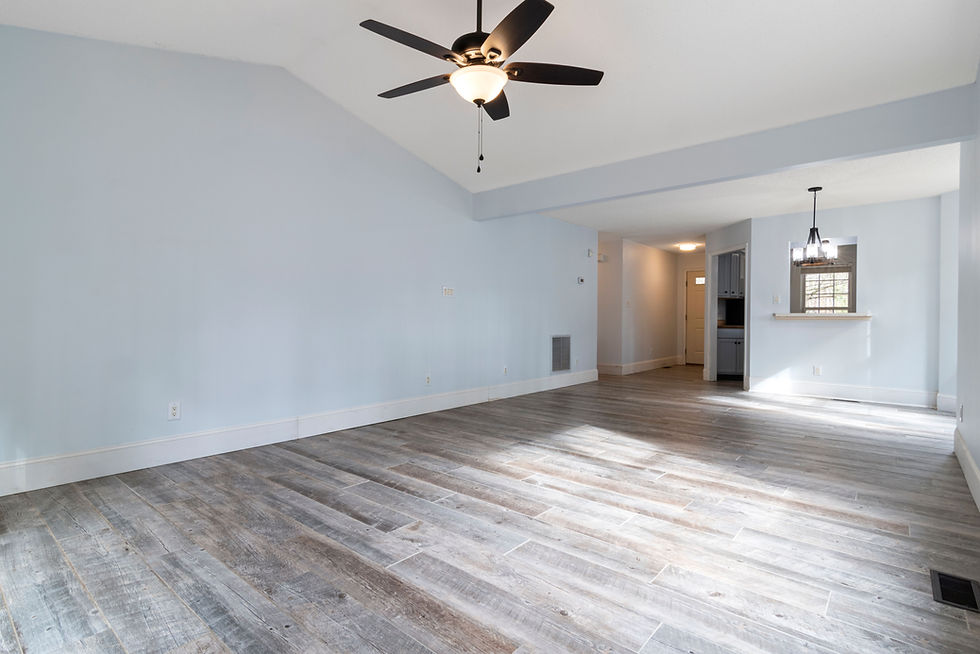
Interior and exterior HDR photography — balanced exposures for basement suites and north-facing units where window light and interior light fight each other
Measured floor plans — one per unit type plus a building-level stacking plan, with room dimensions and suite areas
Immersive Matterport 3D tours — so out-of-province investors can walk the building and its mechanical spaces before booking a flight
Certified drone and aerial photography — full roof condition, parking, lot boundaries and route access in a single frame
Property videography — a walkthrough film for the listing page, broker emails and social distribution on larger assets
Digital virtual staging — for vacant suites, so buyers can read scale and layout without the cost of physically furnishing a rental unit
Frequently Asked Questions
How many photos does a multi-family listing in Edmonton need?
Plan on 30 to 45 images for a typical Edmonton walk-up, versus 20 to 30 for a single-family home. The count is driven by unit types rather than total suites: one complete set per distinct floor plan, plus the full exterior envelope, common areas, mechanical room and neighbourhood context.
Do I need to photograph every unit in the building?
No. One representative, well-presented unit per floor plan type is the standard, and it should be disclosed as representative in the listing remarks. Photographing every occupied suite creates unnecessary tenant disruption and rarely changes an investor's analysis.
What notice do I have to give tenants before a photo shoot in Alberta?
Alberta's Residential Tenancies Act requires at least 24 hours' written notice before a landlord or their agent enters a rented suite, with entry between 8:00 a.m. and 8:00 p.m. In practice, giving a week's notice and confirming what will and will not be photographed produces far better cooperation than the legal minimum.
Is drone photography legal over an apartment building in central Edmonton?
Yes, with the right authorization. Much of central Edmonton falls within controlled airspace around the City Centre and International airports, which requires a certified RPAS pilot operating with prior authorization. Air Unlimited's drone pilots are Transport Canada certified and handle the airspace approvals as part of the booking.
Are floor plans worth it on a small fourplex?
Usually yes. On small multi-family, floor plans confirm the suite mix, verify the areas quoted in the listing and reveal upside — an oversized one-bedroom, a den that reads as a second bedroom, or basement space that could support a legal suite. That evidence tends to matter more to an investor than another photograph would.
Book Your Edmonton Investment Property Shoot
Air Unlimited photographs multi-family and investment properties across Greater Edmonton — from Wîhkwêntôwin and Central McDougall walk-ups to Mill Woods, Bonnie Doon, Beverly and Sherwood Park apartment buildings. Our team has completed over 2,000 property shoots, holds more than 800 five-star reviews, and flies with Transport Canada-certified RPAS pilots. Photos and floor plans are typically delivered within 24 to 48 hours.
Tell us the suite count and unit mix and we'll build a package around the building rather than a flat rate. Book your Edmonton investment property shoot or contact our team to talk through a specific property.
Further Reading
Full service pricing in this market: Real Estate Photography Pricing in Edmonton
Larger income and commercial assets: The Complete Guide to Commercial Real Estate Photography for Edmonton
Aerial coverage in detail: The Complete Guide to Real Estate Drone Photography for Edmonton Listings
Why measured plans close deals: Why Accurate Floor Plans Close Deals Faster in Edmonton
The same playbook in another market: Multi-Family and Investment Property Photography in Saint John


Comments