

The Complete Guide to Virtual Staging for London, Ontario Real Estate Listings in 2026
- Jun 26
- 10 min read
Staged homes sell 73% faster than unstaged listings — and in London, Ontario's current buyer's market, that speed advantage can mean the difference between a quick close and months of carrying costs. Virtual staging delivers that advantage at a fraction of the cost of traditional staging, helping London realtors present every listing at its absolute best without furniture trucks, rental fees, or logistical headaches.
London's real estate market in 2026 presents both opportunity and challenge. According to the London and St. Thomas Association of REALTORS (LSTAR), the average home price sits between $618,000 and $662,000, with properties spending an average of 24 days on market. With 5.0 months of inventory creating a buyer's market, every listing is competing harder for buyer attention — and first impressions happen online, long before a showing is booked.
This guide covers everything London, Ontario realtors need to know about virtual staging in 2026: how the technology works, what it costs compared to physical staging, which rooms deliver the highest ROI, the best design styles for London buyers, and how to choose a provider that meets MLS compliance standards. Whether you're listing a Victorian in Old North, a family home in Byron, or a new build in Hyde Park, virtual staging can help your listings sell faster and for more money.
What Is Virtual Staging and How Does It Work?
Virtual staging is the process of digitally adding furniture, decor, and design elements to photographs of empty or sparsely furnished rooms. Rather than physically moving sofas, tables, and artwork into a property, a virtual staging provider uses a combination of 3D modelling software, AI rendering tools, and professional design expertise to create photorealistic images that show buyers exactly how a space could look when furnished.
The workflow is simple and fast. Your photographer delivers high-resolution photos of the empty property. You select which rooms to stage and choose a design style — modern, farmhouse, transitional, Scandinavian, or any aesthetic that matches the home's character and target buyer profile. Within 24 to 48 hours, the virtual staging team delivers photorealistic staged images alongside the original empty-room photos for full transparency.
Today's AI-powered virtual staging technology has reached a level where staged images are nearly indistinguishable from photographs of physically furnished rooms. The best providers ensure realistic shadows, accurate furniture proportions, and natural lighting that matches each original photo — creating images that look authentic on MLS, social media, and print marketing materials.
How Much Does Virtual Staging Cost in London, Ontario?
Virtual staging costs between $75 and $225 per room, with most full-home packages running $250 to $500 for five to eight rooms. Compare that to physical staging, which typically costs $3,000 to $6,000 for furniture rental, delivery, setup, and removal — not including the monthly rental fees that accumulate if the home takes longer to sell. That's a savings of approximately 97%.
Virtual staging delivers the same buyer engagement as physical staging at roughly 97% less cost — making it viable for every price point in the London, Ontario market, from $400,000 starter homes to $1.2 million properties in Old North.
The cost advantage becomes even more pronounced when you factor in the hidden expenses of physical staging. Traditional staging requires coordinating movers, scheduling access with homeowners, insuring rented furniture against damage, and paying ongoing monthly fees if the property sits on the market. Virtual staging eliminates every one of these line items — you send photos, receive staged images, and you are ready to list.
For London realtors working across the city's diverse inventory — from Wortley Village bungalows to Masonville townhomes to Lambeth new builds — virtual staging's affordable price point makes professional presentation accessible for every listing, not just luxury properties.

Does Virtual Staging Actually Help Sell Homes Faster?
The data is unambiguous: virtual staging accelerates sales. According to the National Association of REALTORS and multiple industry studies, staged homes sell 73% faster than their unstaged counterparts. In concrete terms, that means a staged listing in London could close in roughly 29 days compared to 52 days for a comparable unstaged property — shaving more than three weeks off the typical timeline.
Virtually staged listings receive 90% more online clicks and generate up to 50% more showing requests than empty-room listings — a critical advantage when London's inventory levels give buyers more choices than ever.
The impact extends beyond speed to sale price. NAR data shows that 29% of agents report staged homes selling for 1% to 10% more than comparable unstaged listings. On a London home at the average price of $640,000, even a 2% increase represents an additional $12,800 — far exceeding the $250 to $500 cost of a virtual staging package. The return on investment frequently exceeds 500%.
With over 97% of buyers starting their search online and spending just three seconds deciding whether to click on a listing, the visual impact of staged photos is not optional — it is essential. An empty room with bare walls cannot compete with a beautifully staged space that helps buyers envision their next home.

Which Rooms Should You Virtually Stage First?
Not every room delivers equal staging ROI. If your budget only covers three to five rooms, prioritize these spaces — they have the greatest influence on buyer perception and engagement.
The living room is your highest-impact staging investment. It is typically the first interior photo buyers see in a listing and sets the emotional tone for the entire property. A well-staged living room shows scale, flow, and lifestyle — helping buyers immediately picture themselves in the home. For London's many open-concept layouts common in Byron, Hyde Park, and newer Lambeth developments, staging the living room also defines the relationship between connected dining and kitchen areas.
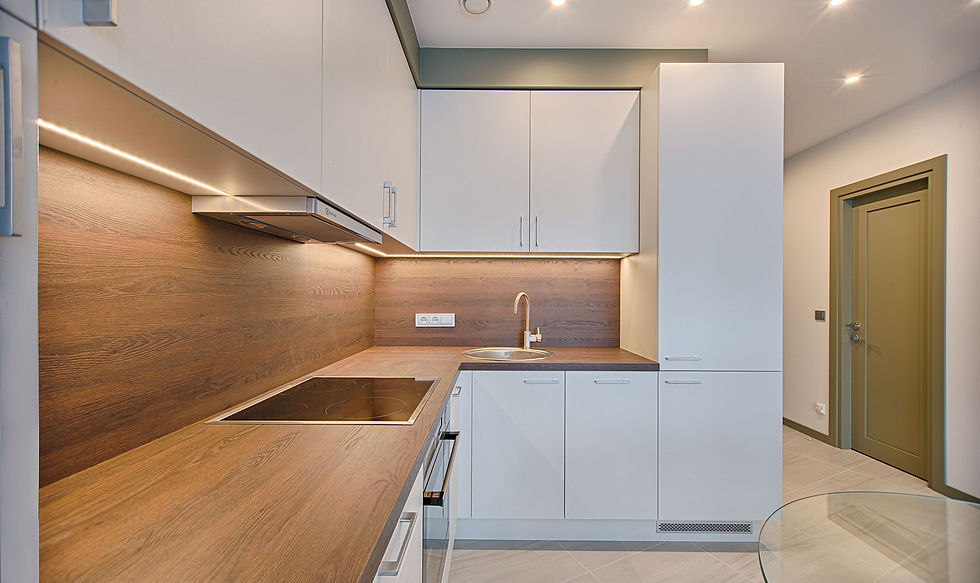
The kitchen ranks second. It is consistently cited as the most important room for buyers evaluating a purchase, and a virtually staged kitchen with a breakfast bar setup, decorative accessories, and strategic styling can transform a dated space into an inviting hub. This is especially impactful for the character homes found throughout Wortley Village and Old East Village, where galley and L-shaped kitchens benefit enormously from thoughtful virtual furniture placement.
The primary bedroom comes third — buyers want to see a retreat, not an empty box. Stage it with a queen or king bed, nightstands, tasteful bedding, and subtle decor to convey comfort and relaxation. Finally, the dining room rounds out the top four, particularly for the two-storey homes common in Masonville, Stoneybrook, and Oakridge where a formal dining room is a key selling feature.
What Are the Best Virtual Staging Styles for London Buyers?
London's buyer demographics are diverse — from Western University students and young professionals to growing families and downsizing retirees — so the staging style you choose should match the property type and the most likely buyer profile. Three styles consistently perform best in the London market.
Modern farmhouse is the top performer for family homes in London's suburban neighbourhoods like Byron, Hyde Park, Lambeth, and Kilworth. Think shiplap accents, warm wood tones, neutral palettes, and comfortable yet stylish furnishings. This aesthetic resonates with the growing families who are the primary buyer demographic in these communities, and it photographs exceptionally well — clean lines with enough warmth to feel inviting.
Contemporary styling works best for newer condos, townhomes, and the modern builds appearing in Foxfield, Talbot Village, and the Riverbend Gateway area. Sleek furniture, minimalist decor, monochromatic palettes with pops of colour, and statement art pieces appeal to young professionals and first-time buyers who value clean, modern aesthetics.
Transitional design bridges the gap between traditional and contemporary, making it the most versatile choice for London's character neighbourhoods. For the Victorians in Old North, the Edwardians in Woodfield, and the post-war bungalows throughout Wortley Village and Westmount, transitional staging honours the home's architectural character while introducing modern comfort. This style avoids dating the space and appeals to the broadest possible range of buyers.
How Does Virtual Staging Compare to Physical Staging?
Both virtual and physical staging aim to help buyers visualize a property's potential, but they differ significantly in cost, flexibility, and logistics. Understanding these differences helps London realtors choose the right approach for each listing.
Cost is the most obvious differentiator. Virtual staging runs $75 to $225 per room, while physical staging averages $3,000 to $6,000 for a full home — plus ongoing monthly rental fees. For a listing at London's average price of $640,000, virtual staging represents less than 0.1% of the sale price while delivering comparable buyer engagement results.
Turnaround time favours virtual staging dramatically. Physical staging requires scheduling a consultation, selecting furniture, coordinating delivery crews, and allowing setup time — a process that typically takes one to two weeks from booking to completion. Virtual staging delivers finished images in 24 to 48 hours. In a market where LSTAR data shows the average listing sells in 24 days, losing a week or more to staging logistics can cost you the critical first-week exposure window.
Flexibility is where virtual staging truly shines. With physical staging, you get one look. With virtual staging, the same room can be presented in multiple styles — show a spare bedroom as a nursery for young families and as a home office for remote workers, all from the same original photo. You can also restage instantly if a listing's target buyer demographic shifts or if feedback suggests a different aesthetic would perform better.
Physical staging does have one advantage: in-person impact. When buyers walk through a physically staged home during a showing, the tactile experience of furnished rooms can create a stronger emotional connection. However, since 97% of buyers start online, virtual staging captures the critical first click — and you can always add selective physical staging touches (fresh flowers, towels, accent pillows) for showings at a minimal additional cost.

What Should London Realtors Look for in a Virtual Staging Provider?
The quality gap between amateur and professional virtual staging is enormous — and using poor-quality staging can actually hurt your listing more than leaving it empty. When evaluating providers, focus on these critical factors.
Photorealism quality — Staged furniture must cast realistic shadows, match the room's existing lighting conditions, and sit at correct proportions relative to the space. Request portfolio samples and zoom in on shadow edges and reflection consistency.
Fast turnaround — Look for providers who deliver within 24 to 48 hours. In a market where homes sell in 24 days on average, waiting a week for staged images means missing the critical first-week listing window when buyer interest peaks.
MLS compliance — LSTAR and Canadian real estate boards require that virtually staged photos be clearly labelled. Your provider should deliver both staged and original empty-room images, and the staged versions should include a subtle watermark or notation indicating virtual staging.
Style variety — Choose a provider offering multiple design aesthetics. A Victorian in Old North requires a completely different staging approach than a new build in Hyde Park, and your provider should have the portfolio depth to handle both.
Before-and-after delivery — Reputable providers always deliver both the original empty photos and the staged versions. This maintains transparency with buyers and ensures you have compliant marketing materials for every platform.
Air Unlimited's virtual staging service checks every one of these boxes — photorealistic quality, 24 to 48 hour turnaround, multiple design styles, MLS-compliant labelling, and before-and-after image delivery included with every order.
Air Unlimited Services for London, Ontario Realtors
Air Unlimited has completed over 2,000 property shoots across Canada and earned 800+ five-star reviews from realtors who trust us with their most important listings. Our complete real estate media packages are designed to maximize your listing's online impact and drive more showings.
Professional HDR photography that provides the ideal base for virtual staging — bright, balanced, and true-to-life
Expert virtual staging with photorealistic furnishings, multiple style options, and 24–48 hour turnaround
Immersive Matterport 3D tours for a complete virtual property experience that goes beyond static images
Accurate floor plans that complement staged photos by showing buyers the full spatial layout
Transport Canada-certified drone photography for aerial perspectives of larger London properties and surrounding neighbourhood amenities
Engaging social media reels that drive engagement on Instagram, TikTok, and Facebook
Frequently Asked Questions About Virtual Staging in London, Ontario
Is virtual staging legal for MLS listings in Ontario?
Yes, virtual staging is fully legal and widely accepted in Ontario real estate. LSTAR and the Canadian Real Estate Association require that virtually staged photos be clearly identified as such. Reputable providers deliver both the original empty-room photos and the staged versions, and staged images should include a notation indicating they are virtually staged. As long as the staging does not misrepresent the property's physical condition — such as digitally removing structural damage or hiding defects — it is considered a standard marketing practice.
How quickly can I get virtually staged photos in London?
Most professional virtual staging providers deliver completed images within 24 to 48 hours of receiving the original photos. Some offer rush delivery within 12 hours at a premium. The best workflow for London realtors is to have your photographer shoot the property and submit the photos for staging on the same day — this means you can have fully staged listing images within two days of the photo shoot, ready for MLS upload and marketing.
Does virtual staging work for occupied homes with existing furniture?
Yes, though the process differs slightly. For occupied homes, virtual staging providers can digitally remove existing furniture and replace it with more appealing, professionally designed pieces — a service sometimes called virtual renovation or virtual redesign. This is particularly useful for London listings where the homeowner's personal furnishings are dated, overly personalized, or do not photograph well. The provider removes the existing items digitally, then stages the empty room with appropriate furniture and decor.
What is the ROI of virtual staging for a typical London listing?
For a London home at the average price of $640,000, virtual staging costing $300 to $500 can contribute to a sale price increase of 1% to 5% — representing $6,400 to $32,000 in additional value. Even at the conservative end, that is an ROI exceeding 1,000%. Beyond price impact, faster sales reduce carrying costs for sellers (mortgage, utilities, insurance, property tax) and earn agents their commission sooner, compounding the financial benefit.
Can I use virtually staged photos on social media and print marketing?
Absolutely. Virtually staged images are delivered in high resolution and are fully suitable for MLS, Realtor.ca, social media platforms (Instagram, Facebook, TikTok), property websites, email marketing campaigns, print brochures, and feature sheets. Most providers deliver images at standard MLS dimensions as well as optimized formats for social media posts and stories, ensuring your marketing is consistent across every channel.
Ready to Transform Your London Listings with Virtual Staging?
Air Unlimited has completed over 2,000 property shoots across Canada, earned 800+ five-star reviews, and serves realtors in every London neighbourhood — from Old North to Byron, Wortley Village to Hyde Park, Masonville to Lambeth. Our Transport Canada-certified drone pilots, professional HDR photographers, and virtual staging team give your listings the complete media package they need to stand out in 2026's competitive market.
Ready to see the difference? Book your London real estate photography and virtual staging package today and give your next listing the presentation it deserves.
Further Reading
Related: The Complete Guide to Virtual Staging for Winnipeg Real Estate Listings in 2026
Also read: The Complete Guide to Virtual Staging for Barrie Real Estate Listings in 2026
Learn more: How to Choose a Real Estate Photographer in London, Ontario
Explore: How Matterport 3D Virtual Tours Help Sell Homes Faster in London, Ontario
See also: Why Accurate Floor Plans Close Deals Faster — A Guide for London, Ontario Realtors


Comments